Monday, 4 July 2011

Giving Back To The Island

Rinchen who has volunteered for much of the season with a spotted flycatcher.


The WC puffin signs made by Kevin and Fiona crew of the May Princess.


Volunteers surveying the breeding gulls.


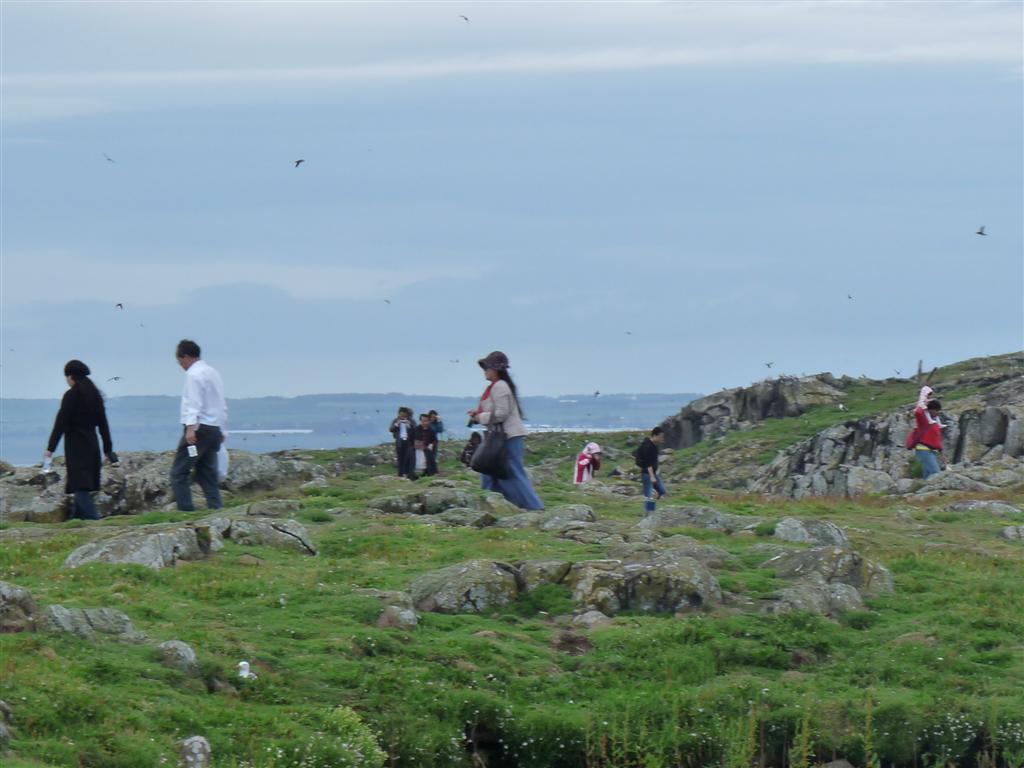
When we all visit the island we all take a bit away from it. It might be the effect of the use of fossil fuels to get there, it might be wear and tear on the paths, disturbance to wildlife or dropping of litter. For a few the Isle of May is there purely for entertainment but for many people who come over hopefully it is a little bit more than that. For us managing the island the main aim of inviting visitors over to see the wildlife spectacle is so that they go home remembering a special day, sometimes one that they will remember all their life and hopefully they will then wonder what they might do to help the island in return. Already many people put in a huge amount of time a effort in all sorts of ways that help the island. The birds observatory based in the Lowlight is organised, managed and run entirely by volunteers and enables the Isle of May to make a contribution to the understanding of bird migration. In running the reserve we gets lots of help from volunteers of all walks of life, in fact we couldn't run the National Nature Reserve with out them. They help with providing information to visitors, helping with the maintenance of the paths and buildings, clean the toilets, monitor the terns and help protect the eider chicks amongst other things. There are too many to name but an example or two of what is done are Kevin and Fiona, the May Princess crew, made the puffin WC signs on the visitor centre toilets, Rinchen made out of recycled materials the crafted leaflet holders and the touch table in the visitor centre, and Flora, Rinchen and Alice who have been helping to monitor our delicate tern population and meeting and greeting visitors. And the Centre for Ecology and Hydrology (CEH) who carry out most of the research into the seabirds on the island also have people who volunteer to check puffin colour rings, help with the shag researcher and carry out the seabird ringing work.
But the main thing we ask is that everyone can do something even if you live far away, simply anything that you do that can minimise climate change by reducing your carbon footprint will be helping seabirds not just on the Isle of May but across the world.
So a big thank to every one that puts a little back into the island however small.

Sunday, 3 July 2011

Whatever next ?


When the visitor boat chugs up to the jetty on the island you just never quite know who is going to get off and what they are going to do? Sometimes there are friends on or people you know, sometimes there is a group booked on with a special interest and sometimes there is a surprise. Yesterday was one of those when the Edinburgh University Renaissance Singers stepped off on a day out. In high spirits and good voice they enjoyed the island and sang. The priory was first stop, it has just been recently opened after the terns nesting there meant that people couldn't get in and seemed a fitting place for renaissance music. It isn't the first time the ruins have seen type of thing. Above is a photo taken at the end of the 2nd world war of a of a christening service held for the daughter of the commander of the island during the war years.
The choir dispersed only to gather and sing on the jetty towards the end of the visit as everyone was filing back onto the boat. A beautiful day, a stunning setting, thousands of birds and all enhanced by beautiful music. Magic.

Saturday, 2 July 2011

Media Spotlight On The Isle of May- not really

The Stevenson Mainlight - the focus of the film crew.


The inside stair case in the Mainlight.

We have been having a bit of media action out here on the island in a very small way, certainly it isn't going to our heads. Firstly we had a visit from Euan McIllwraith from the Out of Doors Radio Scotland show who was doing a bit about Fife. With there a being a water shortage and my personal grooming standards not being as high as normal it was a good thing it was radio. Euan huffed and puffed a bit going up and down the hills but was extremely positive about the island and its wildlife so it was easy form e to witter on about the amazing place that it is. Of course there is more to it than just wittering and i tried to slip in the message about the real purpose of nature reserves of to win over peoples hearts and minds for nature conservation and ultimately make a change in their lifestyles to reduce their carbon footprint and so help the seabirds that way but it was a bit heavy for a Saturday morning and ended up on the cutting room floor. Listening to my voice afterwards is painful but at least it got out to a wider audience the joys of visiting the isle of May.
Next up was a freelance journalist Steve Newman who came to look around the island, chat with a few people and produce a number of tailored articles for various publications. These are yet to appear but will reach a different group of people out there and put the Isle of may on other peoples radar.
And the yesterday the One Show came to visit lead by guest presenter and former political correspondent John Sergeant. Really they were coming to film a piece about the Stevenson Mainlight that dominates the island but couldn't help but be wowed by the birds. John Sergeant was heard to demand that the camera crew must get some shots of the puffins but it wasn't true that this was becuase he and the puffins had the same dancing styles. The piece isn't going to go out for another month but keep your eyes skinned for the Isle of May on prime time TV later in the summer.

Wednesday, 29 June 2011

This week I have mostly been.......

.....enjoying a few more moths in the moth trap, the warm weather has at last brought a few include including this beautiful netted pug.


....welcoming some schools to the island, we have 3 in the last week.


....enjoying the snail formations on the walls and posts. Last nights rain sent then off and about in a frenzy of feeding.


...taking in the beauiful light, especially in some of the evenings.


...admiring the sea campion that is flowering everywhere after being burnt off by the big storms.


...incredibly frustrated when a visitor stepped on a terns nest breaking the eggs despite us having piut a ring of boulders round it and a large marker post. These birds have flown thousands of miles and fought off predatory gulls to breed here only for someones utter carelessness bring their season to an end in a moment.


.....sampling the contrasting lichen encrusted rocks with the haze of blue forget-me-knots.


....watching the researchers as they "grovel" for puffins, that is put their arm down the burrows to check pufflings.


.......meeting the full visitor boats that are coming over at the moment.

....marvelling at the common rosefinch that Mark found in the traps. A beautiful second year male with a pinkish blush that is a bit way off its normal migration route of Africa to Scandanavia.

Tuesday, 28 June 2011

Photograph less, see more.


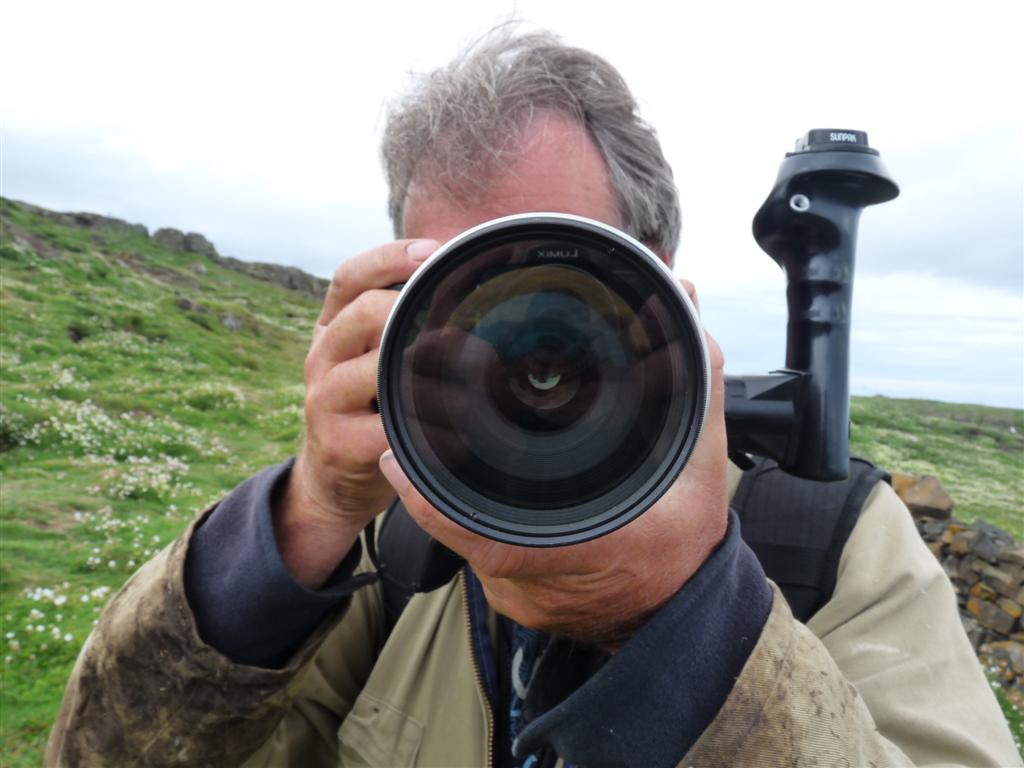
We get lots of photogrpahers to the island at this time of year. Seabirds are large, striking, relatively tame and so easy to photograph and couple this with stunning backgrounds of seascapes, cliffs, carpets of thrift and sea campion and lichen encrusted rocks it draws photographers from all over Europe. There is also the puffin factor, people will travel across continents to photograph them and the Isle of May is one of the best places to achieve this. And it is a pleasure to see people connecting with the island and the beauitful images that result. But it has to be said that my heart drops when I see an array of huge lenses come off the boat because I know that there may be a challenging afternoon ahead.
To be clear most photogrpahers are exemplery on their visits to the island and treat it with respect but if you find someone off the path almost always they will have a large lens strapped to their face. For some reason the request to stick to the paths to avoid having an impact on the breeding birds doesn't seem to apply to the photogrpahers and their desire for the perfect image means that they consider their photograph to be more important that the breeding success of their subjects. The top wildlife photographers are expert ecologists who know the lives of their subjects intimitly and use this knowledge to get better photographs but we have had photographers turn up wanting to know why the puffins aren't carrying fish in early May (becasue they are all sitting on eggs then)or why is one gull teaching another to fly by carrying it on its back (it isn't, its mating).
And then there is their shopping list. Many photogrpahers come to the island with a list of images that they want to capture and leave miserable at the end of their visit if they have not got that picture of puffin with dew on it head or the right number and arrangement of sandeels that they wanted, or are grumpy as the light is not quite what they wanted. And meanwhile they will have missed hundreds of spontaneously stunning sights like a tern chasing a herring gull, or backlight sea campion, or shags gleaming in the sun feeding their young.
So perhaps there is a lesson to us all there, that there is so much to see on the Isle of May that with open eyes, an enquiring mind and a bit of pateience it can be experience and recorded by anyone without having an impact of the birds and the island itself. And real life is even better than watching on the TV or looking at photos.

Sunday, 26 June 2011

Surrounded by water with nothing to drink......or wash


Seen from the island showers falling elsewhere.

St. Johns Well, water suitable for cattle and modern day island inhbitants.

Our modern day water puritfication system, it just add water to work.


View down the well.


Water is a hot topic of discussion with the island residents because we have so little of it.
But we aren't the first island inhabitants to be up against this problem. Water has always been in short supply even though there are 5 permanent wells on the island plus some springs and pools. Several hundreds of years back cattle were never raised in large numbers, just a few milk cows, on the island because of the amount of water they need. The lighthouse keepers had always had their water brought over to the island firstly from Crail and then in later years by the lighthouse supply ship. In 1868 Joseph Agnew, the principal lighthouse keeper wrote about the wells and none got much of a write up, for instance Lady's Well "had cool and refreshing water with a peculiar taste", Sheep's Well (so called from having a sheep drown in it) "was so bad that keepers were banned from using it" (an after effect of the drowned sheep ?) and St. Johns Well " a bit brackish and used for watering the cattle". And this last well is where we get our water from today.
It lies just down near to Kirkhaven and receives water as it passes through the aquifer that is the whole rock island. As it is near to the sea it is affected by the tide and as a consequence it is a little brackish. For many years we drank this water have been UV treated for bugs and soon got used to salty tea and coffee (the coffee tasted better than the tea). But new water regulations mean that we have to have the water treated further but tin this reverse osmosis treatment up to 80% of the water is rejected to be used for toilet flushing. Knowing this we have been on a 1 shower a week ration and minimal clothes washing but even that has not been enough. A couple of weeks ago the well literally ran dry, probably as a result of the very dry winter that didn't fill up the island aquifer enough. So this is where endurance and improvisation comes in. Some water comes over in containers on the May Princess and the rest is boiled rainwater. A number have been testing the washing in the sea options (cold, bracing and ultimately a bit sticky) while quick thinking Bethany took advantage of a heavy rain shower and washed round the back of one of the lighthouse keepers cottages (luckily no visitor boat was on !). The recent showers won't make much difference to the well and we really need a wet winter to refill the island rock. Two teenagers stepped off the May Princess the other day and said "ooo, what a stink" and we weren't sure if they were referring to the island as a whole or the small group of staff standing at the jetty so apologies to any visitors coming on over the next weeks and a suggestion that if they can they should stand down wind of any island residents that they meet.

Thursday, 23 June 2011

To and From the Island - 144 times in 6 months.


Most people come to the Isle of May from Anstruhter on the May Princess, visitors, staff and researchers. Kevin and Fiona Smith, writing below, are the boats crew that make that trip 144 times a season (weather permitting of course).
"Kevin & I originally came to work on the May Princess for the Summer season in 2008 having taken a sabbatical from our banking jobs and we are still here!! The Isle of May really gets under your skin and we feel really lucky to be able to visit the island throughout the season and see the ever changing face of this magical place.
The May Princess sails up to 7 days a week out of Anstruther, with up to 100 passengers. A typical day starts with Kevin & James, the skipper, preparing the boat for the sailing (most important job is to make sure the urn is on for cups of tea), while I issue the tickets from our kiosk on the pier. It takes just under an hour to cover the 6 miles to the May. Sometimes we are blessed with flat calm seas and at other times we experience some ‘rock and roll’ when the sea is a little choppy.
Our job is very rewarding and we meet lots of interesting and like minded people. It always a pleasure to share that first sighting of a puffin with a first time visitor as it is to see a well kent face returning for another island fix. Kevin keeps us informed of anything interesting that is happening at sea and helps our passengers to identify both the landmarks on the island and the birdlife around it. We try to do a full circumference of the island on each trip, doing one side as we approach and the other on our return journey.
We tie up in Kirkhaven harbour at the island and, after a brief talk from the warden, our passengers are free to go off and explore for two or three hours depending on the tide.
We also try and spend at least an hour each day going for a wander around the island and I can honestly say we see something different every day. Our picnic spot changes depending on the direct of the wind but one of our favourite seats is at Alterstanes or outside the main lighthouse on our favourite bench which we renovated in 2008 – think it is needing some work again though!!!
Then it is back to the boat so that passengers can buy a well earned cup of coffee before our sail back to Anstruther. All that sea air definitely does you good – half the boat is normally asleep as we cruise back across the Forth!!
Our passengers disembark, hopefully with lots of happy memories and numerous photos, most of them heading off for fish and chips. All that is left for us to do is to tidy the boat in preparation for the next day and another sail to the May."