Showing posts with label fulmers. Show all posts

Friday, 6 July 2012

Fulmars

Fulmars

During my last few days of shore leave I was down at Slimbridge Wildfowl and Wetlands Trust doing a bit of birdwatching. As I was walking around the captive bird enclosures a bird under a bench caught my eye.


It was a Fulmar, a very scarce bird in Gloucestershire. This bird was unlucky enough to have been caught in gales that had blown up the Bristol Channel and got lost.


I managed to catch the bird safely but I then realised I'd never handled one before. The birds are naturally very light. They also had a very interesting fishy smell. It also had a very strong bite. It was not too keen on being handled and drew more blood then a any Puffin ever has!

We kept the bird for 24 hours and released it below the Severn Bridge where it flew away strongly.

So what's a story about about my holidays doing on the blog I hear the readers and particularly David asking?


Well, I found our first Fulmar chick today. Fulmars are our last birds to nest and hatch young on the Isle of May. This bird is at Burnetts leap. The bird had just finished hatching. It still had bits of eggshell on it's back. Here is a close-up of the bird


At the time of writing, as well as all the visitor management work i am also writing our annual report and have totalled up the Fulmar count on the island. The total is 286 occupied nest sites around the island which is down by 20 occupied site last year.

Friday, 18 May 2012

How did the puffin get its name?

The other day I got to wondering… how did the puffin get its name? So one wet day I spent half an hour or so scouring the internet, trying to find the origins for the names of some of the seabirds that breed here.
 
Although puffins look more like clowns with their brightly coloured bills and orange feet, their latin name, Fratercula arctica, means "little friar of the north". Perhaps this is because the puffin’s black and white plumage looks a little like a friar’s robes? Or maybe it’s because of the way they run from their burrow, like a monk scurrying to cloisters?


The latin name of the Eider, Somateria mollissima, is very appropriate. Combining ‘soma’ (body), ‘erion’ (wool) and ‘mollissima’ (very soft), their latin name gives us “very soft body wool” - a perfect description of the down that they use to line their nests, and which we use to fill duvets and pillows.


The genus name for the fulmar, Fulmarus, comes from the Old Norse words ‘full’ (foul), and ‘mar’ (gull). “Foul-gull” might seem a bit harsh, but if you’ve ever been on the receiving end of fulmar regurgitate, you’ll understand where the name comes from! Fulmars produce a bright orange stomach oil that is a rich food source for their chicks; it also doubles as a defense mechanism. They vomit this foul smelling oil at predators to warn them off. So don’t get too close…. You have been warned!


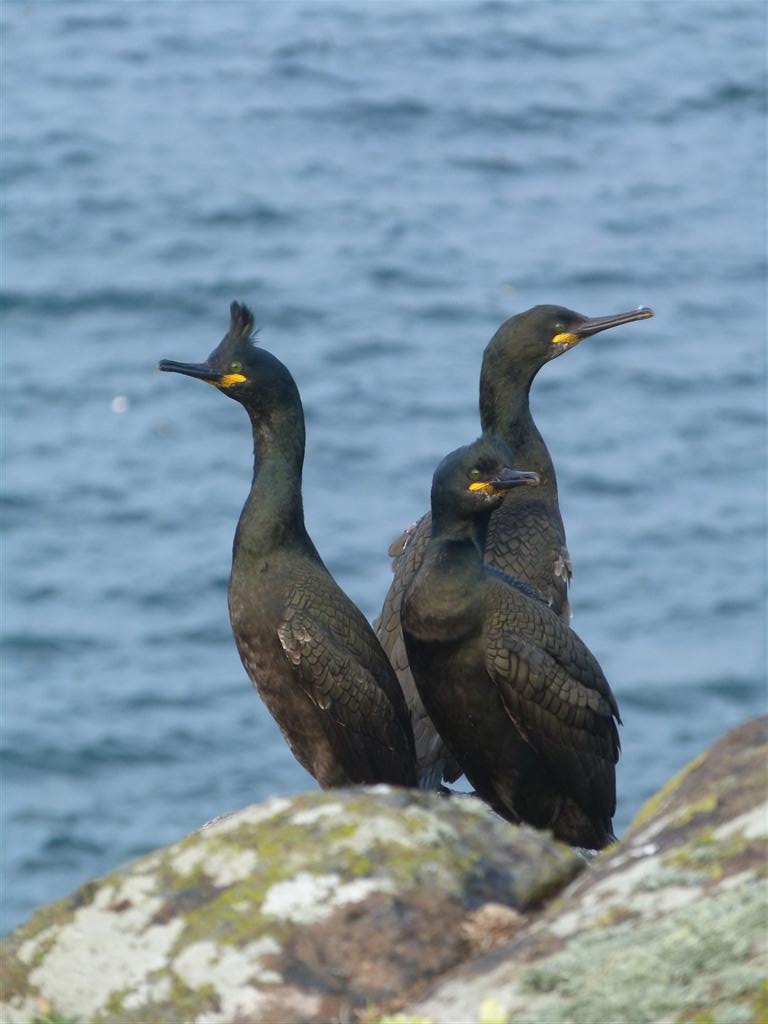
Phalacrocorax aristotelis, otherwise known as the European Shag, has a bit of a misleading name. The scientific name is latinized Ancient Greek, and is a combination of phalakros (bald) and korax (raven) – the bald part of the name may refer to the cheek patches of the adults, whilst the raven part demonstrates the erroneous belief that the birds were corvids.  The common name, shag, simply refers to the bird's tuffed crest.

Paula, Summer Volunteer.