Wednesday, 23 May 2012

Introducing Lucie.


Ahoj,

When you hear someone speaking with a strange accent, it wouldn’t be a tourist with weird Scots’ style accent but me – Lucie, the second SNH volunteer. I come from Czech Republic and currently study MSc conservation and biodiversity at the University of Leeds. I was lucky enough to get the opportunity to spend a couple of months doing tasks such as counting gulls and terns, showing the beauty of the island to tourists, all odd jobs around and anything where as many helping hands are needed around.

I decided to get my dream come true after many years of working with children and in tourism sector, while enjoying natural beauty of different continents. Not being able to find almost any kind of job, I decided to go back to University and become an ecologist.

I arrived to May on a day of very rough sea. The boat was going up and down like a Yo-yo and the cold wind kept me lets say ‘well preserved’. When we finally landed, I was warmly welcomed by the SNH team and bird researchers. I fell in love with the island straight away; with the hauling sound of Eiders, freaky gull attacks, clicking sound of flying puffins and bunnies hopping everywhere. I look forward to learn about the May’s wildlife and welcome visitors to enjoy at least a glimpse of my lucky time….


Tuesday, 22 May 2012

Ring of Steel


There are many hazards for Eider ducklings. They are born very small and vulnerable. Up to a thousand Eiders nesting around the Isle of May NNR. Gulls are the biggest danger to the ducklings and eggs of Eiders.  I captured this sequence of shots demonstrating a few of the techniques that eiders have adopted to help defend their young.


This Greater Black-backed Gull takes an interest in this creche of Eiders. See how a group of females are working together to protect the young, forming a 'ring of steel.'


An adult breaks away from the group and starts to throw her head back  and calling, threatening the gull.


She then plonks herself down forming a barrier between the rest of the group and the gull


The gull attempts another attack from the front but is driven away by the adult at the front

This group got safely down to the ditch at Horse Hole where they could see shelter. The gull gave up shortly afterwards It is a great demonstration of teamwork by these birds. I hope they made safe passage over to the Fife coast!

Monday, 21 May 2012

Also in the news....


Spot the Puffin carrying fish. This bird is feeding young


Greater Black-backed Gulls are hatching


There are still plenty of seals about. This tagged beast is off Alterstanes


We're knee deep in hatched Eider duckilings


The Arctic Terns are back at the colony sites


And this Razorbill still loves having his photo taken at the Bishops Viewpiont!

Bluethroat

The winds were from the north east and the rain fell on Thursday and Friday. There was no field work. By the evening  the rain had stopped. Mark came in to say he'd seen a Bluethroat on the south of the Island.

Bluethroats are small birds that are not so distantly related to Robins. They breed in Scandinavia. They do not breed in Britain but they are a scarce spring migrant along the east coast. The Isle of May sees this species almost annually. The males have a lovely 'cornflower blue' throat with a red spot in the middle.

I missed the bird that Mark saw but on Saturday morning I was going over to pick the luggage up for the Bird Observatory. I saw a plump bird with a short tail and a strong facial pattern jump out of a ditch. A Bluethroat! The bird ran around feeding quickly and was very difficult to photograph. It flew away towards the main light and disappeared. I proceeded to go down to the Lowlightlight and when I got to Horse Hole and the same happened. Another female Bluethroat! And I had not even got off the quadbike!


The Bluethroats skulks behind a rock


A different bird was ringed in the afternoon


Out in the open enjoying the early evening sunshine


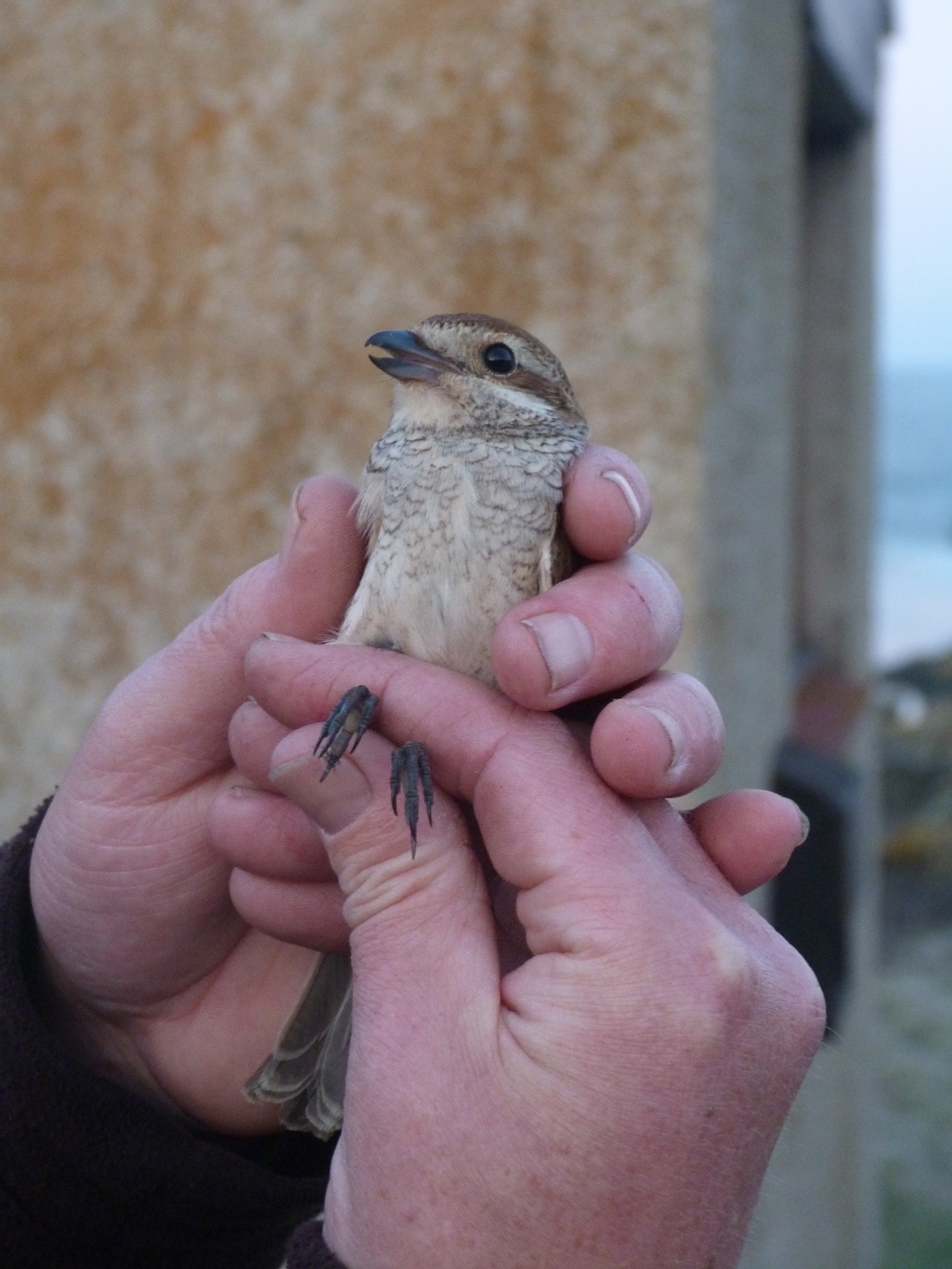
Later in the evening I was escorting our new volunteer Lucie to the Lighthouse . On our way back I found a female Red-backed Shrike. Another scarce migrant to the east coast. We enjoyed watching the bird catching flies and flying from stalk to stalk. Then the ringers caught it.


A female Yellow Wagtail dropped in to add more colour to the proceedings.

There were a lot of common migrants to see. Those lucky enough to be out on the boat on Sunday were treated to a selection of these birds including one regular who was delighted by not only seeing but photographing his first Bluethroat.


Friday, 18 May 2012

How did the puffin get its name?

The other day I got to wondering… how did the puffin get its name? So one wet day I spent half an hour or so scouring the internet, trying to find the origins for the names of some of the seabirds that breed here.
 
Although puffins look more like clowns with their brightly coloured bills and orange feet, their latin name, Fratercula arctica, means "little friar of the north". Perhaps this is because the puffin’s black and white plumage looks a little like a friar’s robes? Or maybe it’s because of the way they run from their burrow, like a monk scurrying to cloisters?


The latin name of the Eider, Somateria mollissima, is very appropriate. Combining ‘soma’ (body), ‘erion’ (wool) and ‘mollissima’ (very soft), their latin name gives us “very soft body wool” - a perfect description of the down that they use to line their nests, and which we use to fill duvets and pillows.


The genus name for the fulmar, Fulmarus, comes from the Old Norse words ‘full’ (foul), and ‘mar’ (gull). “Foul-gull” might seem a bit harsh, but if you’ve ever been on the receiving end of fulmar regurgitate, you’ll understand where the name comes from! Fulmars produce a bright orange stomach oil that is a rich food source for their chicks; it also doubles as a defense mechanism. They vomit this foul smelling oil at predators to warn them off. So don’t get too close…. You have been warned!


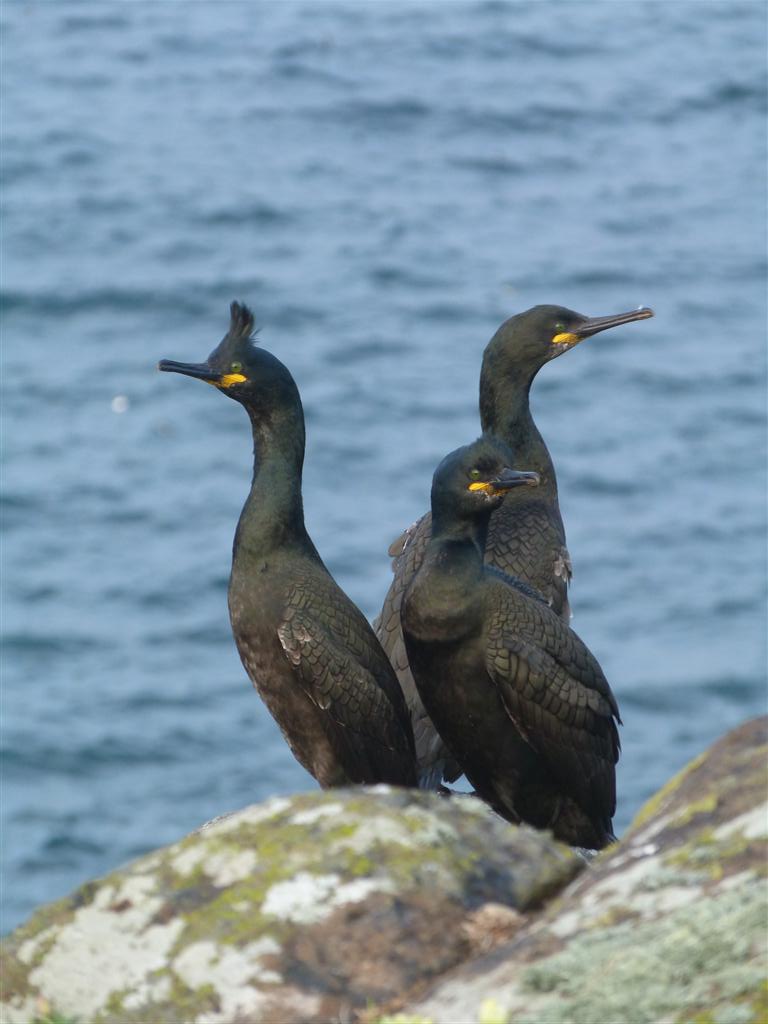
Phalacrocorax aristotelis, otherwise known as the European Shag, has a bit of a misleading name. The scientific name is latinized Ancient Greek, and is a combination of phalakros (bald) and korax (raven) – the bald part of the name may refer to the cheek patches of the adults, whilst the raven part demonstrates the erroneous belief that the birds were corvids.  The common name, shag, simply refers to the bird's tuffed crest.

Paula, Summer Volunteer.

Thursday, 17 May 2012

Calender Boy


Jeremy launched a new career on the island yesterday when he modelled for a calender. The company that services our quad bike wanted a photo of the machine and rider in an unusual location and Jeremy being, young, chiseled and most importantly clean with no stubble having just come back onto the island, was the man for the job.  This is him being snapped. A picture of the quad and the island on workshops and farm offices across the country will mean raising the awareness of the island to a completely different audience. The resulting photos should make it onto the blog at sometime.


Another modelling session was for one of two cuckoos caught the day before on the island. It is only when you see them in the hand that you realise quite what a strikingly unusual bird they are. Such big eyes!.
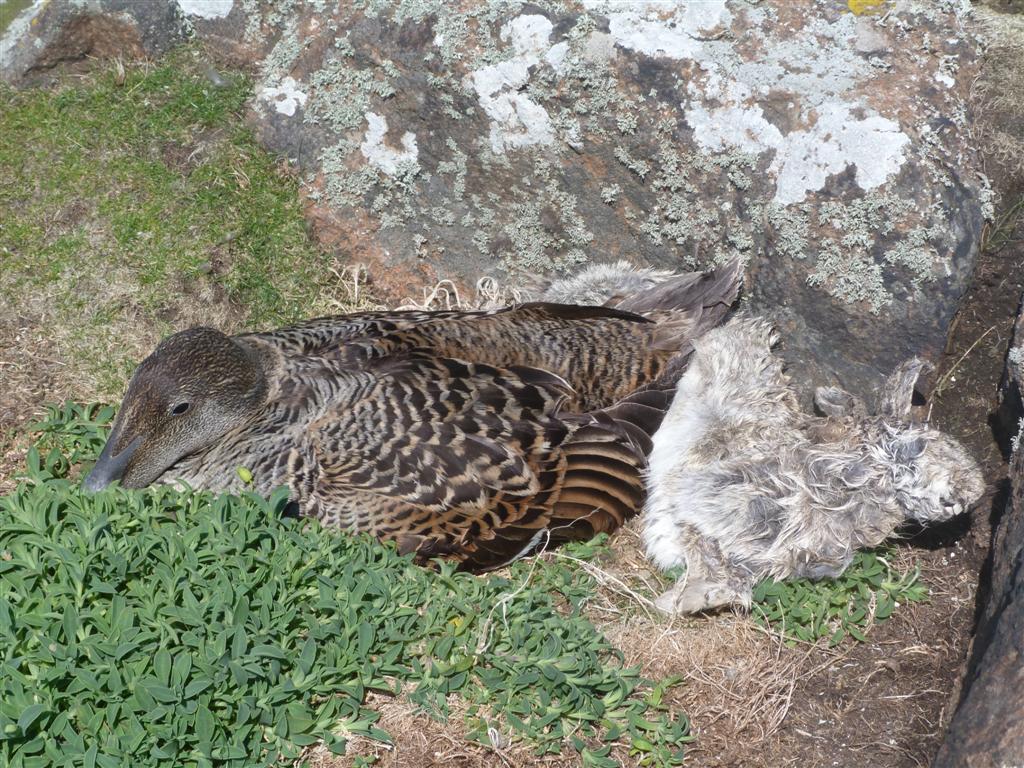
In the previous posting Paula showed what unusual material was used by shags in their nests. What the shags can do so can the eiders. This eider has Incorporated a long dead rabbit into her nest, maybe it works as a furry draught excluder ?
The weather has been gradually improving and a calmer evening with a bit of sun gave me the chance to go out and have a look at the sea birds on the cliffs. Some cliff faces have had a bit of a battering from wind and rain but many birds are busy incubating eggs.


Wednesday, 16 May 2012

Home is where the ….paintbrush is?

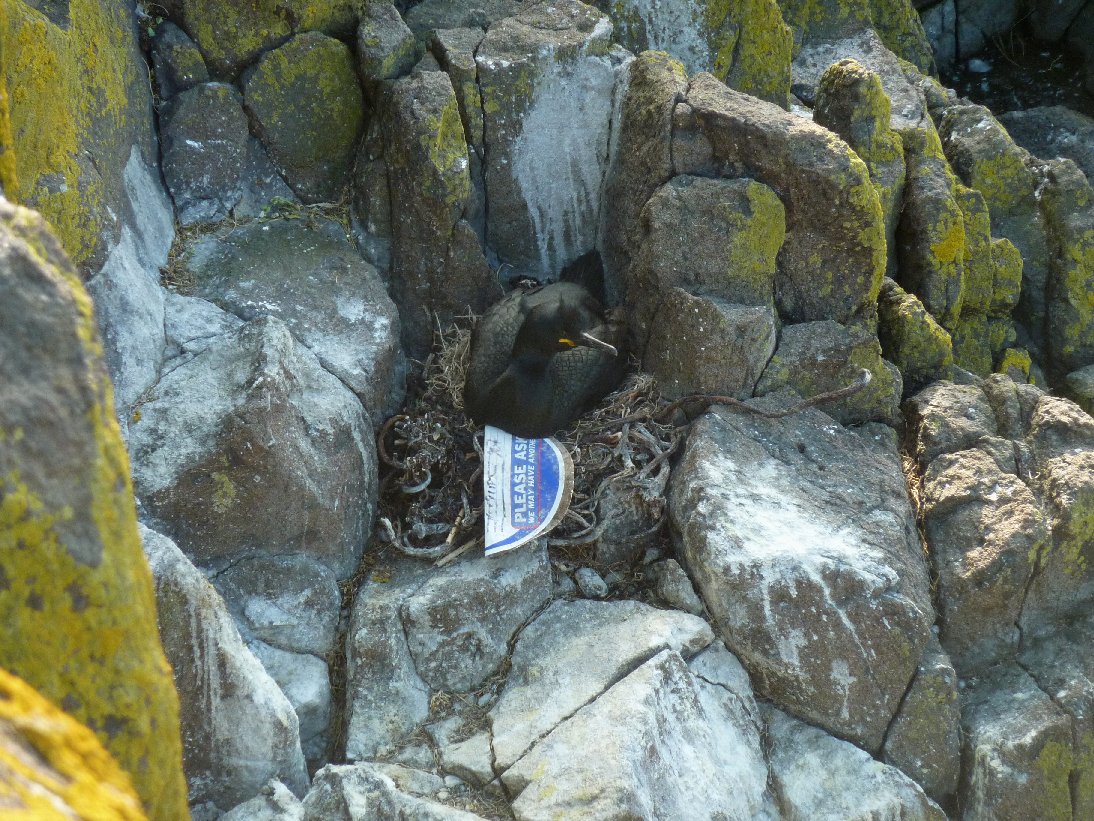
Everyone loves puffins, but what about the other birds on the island? Each species has a unique set of characteristics that give it a charm of its own. The tough little razorbills look like bouncers at a nightclub, whilst the kittiwakes are busy little socialites often seen in groups, collecting mud and grass for their nests, or bathing together in the loch. The shag, however is the king (or queen) of interior decorating! Not one to be content with a bare ledge or a standard nest like other seabirds, shags have an eye for the unusual. Although their main nesting materials are sticks and seaweed, they often amuse us with their little flourishes. Anything ‘stick-like’ seems to attract their attention, with garden canes, cutlery and paintbrushes (unfortunately for the contractors who were painting the Low Light) being prominently displayed. Others appear to have an eye for colour, using different pieces of old rope to produce a bold rainbow effect to their (not-so) humble abode. Among the more unusual items are: a doll, some garden hose, a toy lobster and a padlock! Carrie and Katherine, two of the seabird researchers, have provided the pictures for today’s blog – see if you can spot the unusual things these birds have been attracted to.


Although this is a light-hearted look at bird behaviour, there is a serious note to this blog. Human behaviour has a huge impact on the world around us and the animals that live in it. The items incorporated in these shag nests are a sobering reminder of the rubbish that finds its way into our seas and onto our beaches. It is estimated that one million seabirds and 100,000 sea mammals die each year from swallowing, or getting entangled in, plastic. Do your bit to help save these animals by making sure you recycle and dispose of your rubbish responsibly.

Paula (summer volunteer)