Showing posts with label migrating birds. Show all posts

Monday, 21 May 2012

Bluethroat

The winds were from the north east and the rain fell on Thursday and Friday. There was no field work. By the evening  the rain had stopped. Mark came in to say he'd seen a Bluethroat on the south of the Island.

Bluethroats are small birds that are not so distantly related to Robins. They breed in Scandinavia. They do not breed in Britain but they are a scarce spring migrant along the east coast. The Isle of May sees this species almost annually. The males have a lovely 'cornflower blue' throat with a red spot in the middle.

I missed the bird that Mark saw but on Saturday morning I was going over to pick the luggage up for the Bird Observatory. I saw a plump bird with a short tail and a strong facial pattern jump out of a ditch. A Bluethroat! The bird ran around feeding quickly and was very difficult to photograph. It flew away towards the main light and disappeared. I proceeded to go down to the Lowlightlight and when I got to Horse Hole and the same happened. Another female Bluethroat! And I had not even got off the quadbike!


The Bluethroats skulks behind a rock


A different bird was ringed in the afternoon


Out in the open enjoying the early evening sunshine
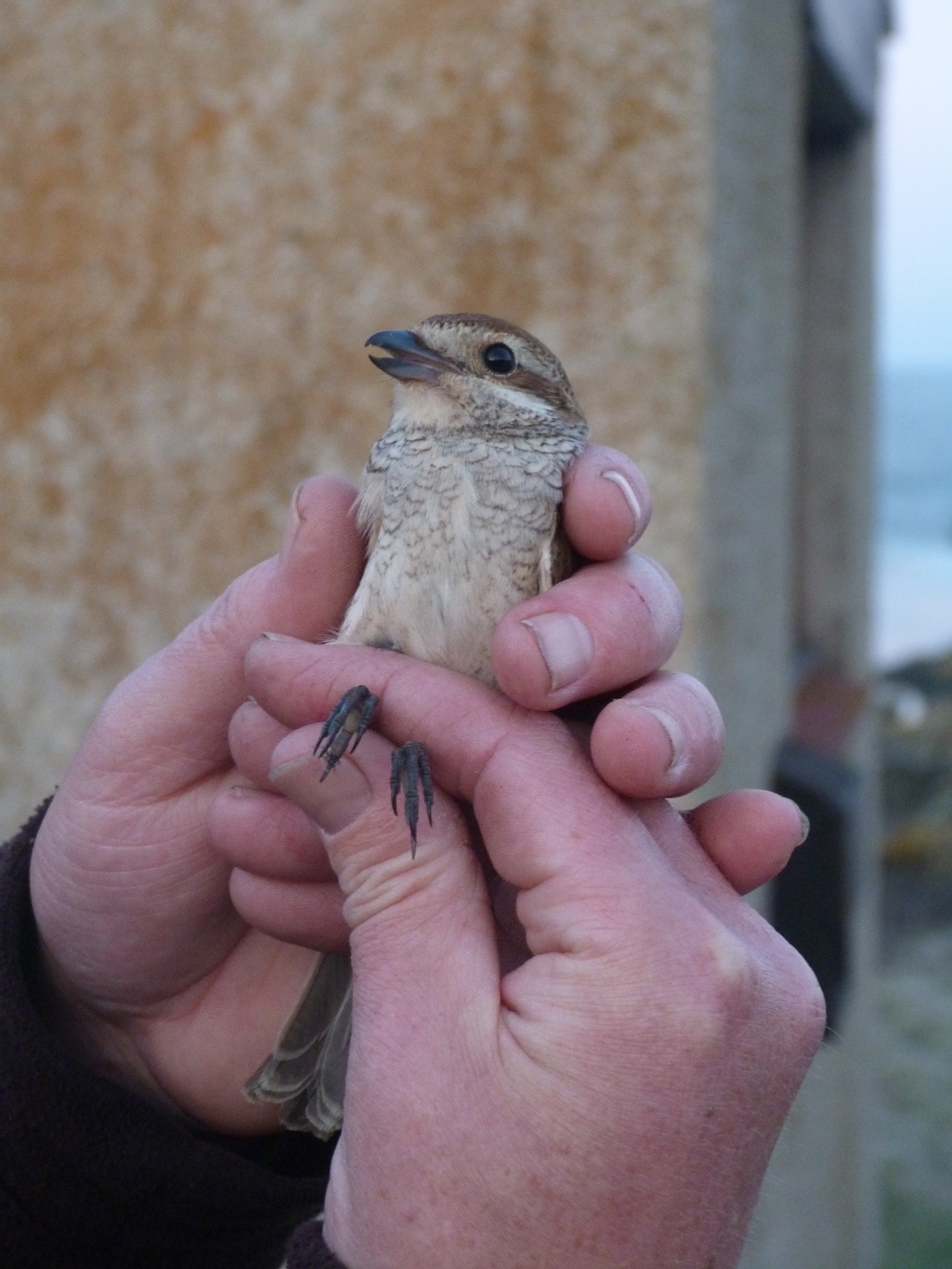

Later in the evening I was escorting our new volunteer Lucie to the Lighthouse . On our way back I found a female Red-backed Shrike. Another scarce migrant to the east coast. We enjoyed watching the bird catching flies and flying from stalk to stalk. Then the ringers caught it.


A female Yellow Wagtail dropped in to add more colour to the proceedings.

There were a lot of common migrants to see. Those lucky enough to be out on the boat on Sunday were treated to a selection of these birds including one regular who was delighted by not only seeing but photographing his first Bluethroat.


Sunday, 29 April 2012

Long-eared Owl

Long-eared Owl


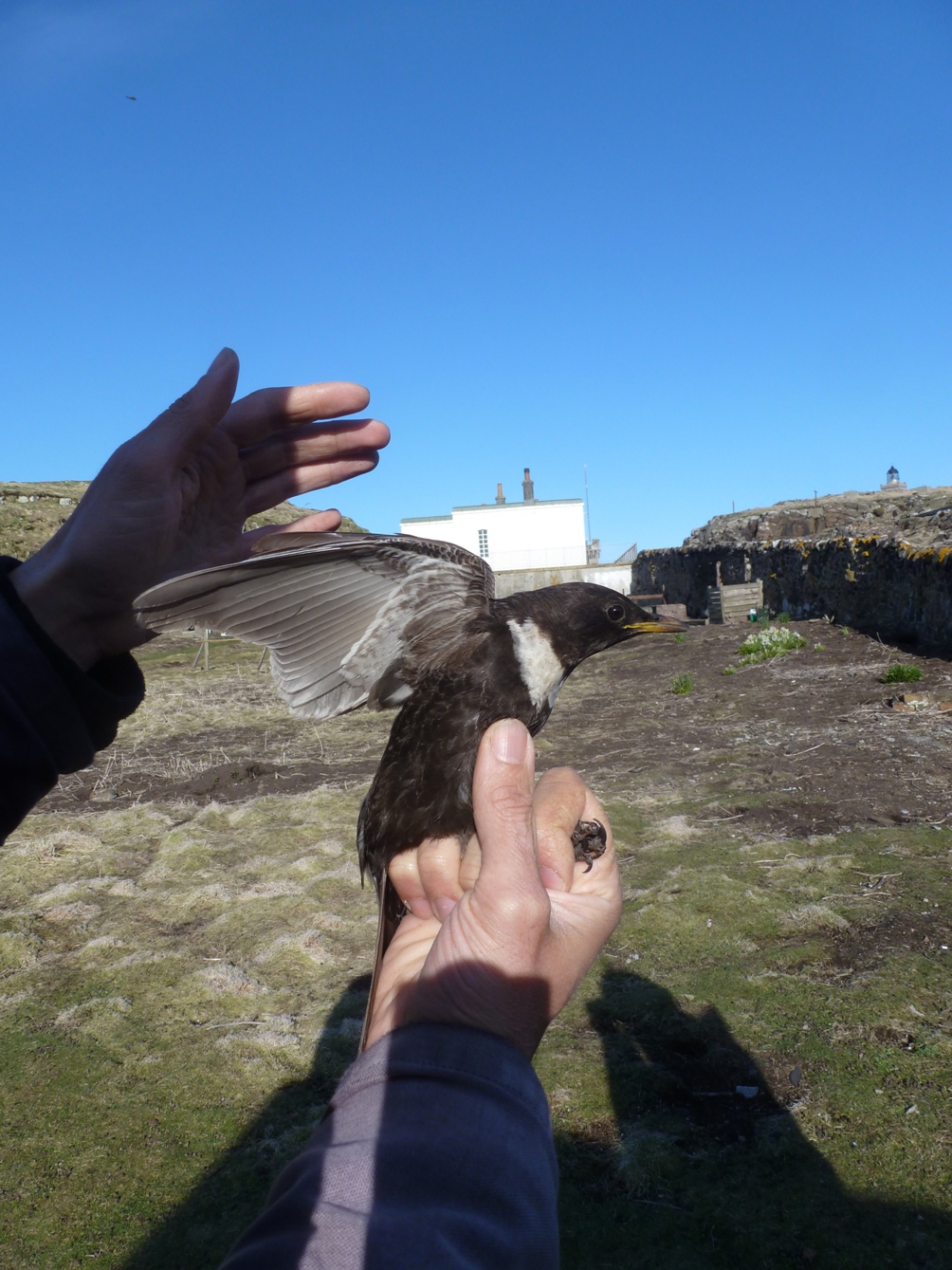
I'd had my Sunday breakfast and decided to go for a stroll. I stopped in and watched the Eiders for a while as the males were displaying to the female. I began to walk up Palpitation Brae up to the Mainlight pausing briefly for a look at a Chiffchaff and a male Ring Ouzel. As I got to the top I could hear a commotion in the Arnott trap. The Pied Wagtails and Robins were all alarm calling. I peeked over the wall to see a Long-eared Owl looking back at me. I dropped back down behind the wall and got the camera out. I rattled off a few shots but the attention of the Pied Wagtail was too much and the nervous bird flew into the cover in the trap. 

I walked back down to the Lighthouse Keepers cottages to find Mark to see if he wanted to trap it. He had actually seen the bird flying onto the island with an entourage of gulls. Though he had not even had his breakfast we set off to see if we could trap it only briefly pausing to stop and look at a Tree Pipit along the way.


Mark expertly and safely trapped the bird and took it to the ringing hut. The bird was ringed, weighed and measured.


Fluke Street and Lowlight occupants all were present with cameras.


The owl was released along Holymans Road away from the gulls. From here it would see the Lowlight bushes where it would be able to roost safely. 

Long-eared Owl is principally an Autumn migrant on the Isle of May. This season seen three already and trapped two of them. Both birds have been adult females. These may well be migrating north to breed in a woodland somewhere in Scotland. They are nocturnal and hard to find so it's always a pleasure to get a view of this breath taking species. 


Saturday, 28 April 2012

A week of birds!


The wind has mostly been coming from the north east this week . This is not great for a couple of reasons. The boats have been unable to land so we've seen few visitors this week and birds which are heading to the continent are having their migration hindered. However there have been lots of birds around the island for us to see and for Mark to trap.


This will not be the last picture of a Long-eared Owl you will see this season if we see more on the island


The lovely black black chin of a male Redstart. There have been three of these cracking birds present on the this weekend. They normally breed in birch trees on the mainland of which there are none on the Isle of May.


The injury to Marks hand was not done by the Redstart!


Here is the Redstart hopping around looking for food in the bare vegetation near the tractor shed.


This is a 'Continental' Robin. It is bigger, greyer with a more orange breast then the birds that breed in back gardens in the UK.

This Ring Ouzel breeds in the mountains. Is it trying to make it's way to Scandinavia?


A close look at this  different Ring Ouzel shows it is carrying a tick.


This is the first Fieldfare I've seen in the hand. What a fantastic bird to see up close!


Here is a Mark doing an impression of James Herriot calving. He's really extracting birds from the catching box.


We've been catching more then just birds in the trap. The girls were more delighted then the rabbits.

Sunday, 11 September 2011

May in Autumn - Inbetween Times


This is a funny time of year for the island. It is very much inbetween times but that is not a bad thing. Most of the seabirds have finished their breeding cycle and left terra firma to head out to where they spend the bulk of their lives, far out at sea. The seals have spent the summer stuffing themselves with fish and are starting to return but haven't yet claimed the island for their own; that will come in 4-5 weeks time. So there is a tranquil, calm feel about the place. Even the gulls are down to ones and twos during the day though good numbers come back to roost over night. There are places to think without being immediately distracted by puffins or kittiwakes and the wind becomes ever more evident, even more so today as it is building for a right good blow tonight. No visitor boats today and unlikely for tomorrow. This end of season feel is strengthened by the colour of the plants. The elder and the nettles are turning black from all the winds, the yellow ragwort turning to fluffy seeds and the grass is in places just starting to show signs of winter die back. There are also more subtle signs such as the day length and the height and intensity of the sun in the sky and intensity that subconsciously tell us that summer is over the autumn is well with us.

Autumnal rustic - first island record
Pink-barred sallow
But there is still plenty to see. The migrant birds are coming to the fore and generate excitement with their amazing journeying. This morning a flood of swallows, sand martens, house martens and meadow pipits headed south with some purpose. Maybe they can feel the change in the weather and want to get far south as fast as they can? Over an hour several hundred went through the island, slipping between the gaps in the gusts of southerly wind. A kestrel followed them eyeing them up for a possible meal while a party of redpolls went through last evening with the same determination. Out at sea there is a lot of movement but the seabirds have different flight plans to the song birds with some heading north, some west and some south. The other night I got very excited as I saw my first sooty shearwater, a large brown (clue is in the name) seabird that breeds in the southern oceans but spends its winters in ours. The more familiar gannets are still trailing backwards and forwards past the island to a from fishing expeditions and kittiwakes, young and old, have been gathering in a group of over 4000 to roost on the island. On a smaller scale the autumn moths are often the best and in the last few days we have caught only the second ever pink-barred sallow and the first autumnal rustic for the island. My favourite is the latter as it is subtler and more stylish that the bubblegum pink and yellow sallow.
So on the Isle of May, even in inbetween times, it is not about whether you will see anything but just how long will you watch.